I’ve watched craniosacral practitioners do some of the most subtle, profound work I have ever seen in the holistic health space — and then watched the same practitioners describe their practice, six months later, as “barely surviving.”
It’s a particular kind of cruelty. You spend seven hundred hours — or far more — learning to read the craniosacral rhythm. You sit with a client through a still point and feel something release that they have been carrying for decades. They get up, tell you they have never felt anything like it, book two more sessions, and then you go home, look at your calendar, see two appointments next week and a credit card payment due, and feel that same cold pit: is this actually going to work?
I know that silent war. I lived a version of it for years as an acupuncturist before I figured out what was actually happening — I wrote about the deeper pattern in The Practitioner’s Dilemma — but I want to name it specifically for you, because craniosacral practitioners live inside an especially brutal version of this divide.
You work with a modality that is almost invisible from the outside.
Someone walking past your treatment room window would see you sitting with a client, hands resting lightly on the occiput, both of you barely moving. There is nothing to photograph. Nothing to film in a thirty-second reel. Nothing to explain in a single sentence that does not either sound impossibly mystical or collapse into mechanistic oversimplification. And on top of that, the training that produced you — whether Upledger, Biodynamic, or another lineage — spent years teaching you to become quiet. To step back. To let the body’s inherent intelligence lead. Everything that makes you good at this work makes you bad at announcing yourself.
That gap between the depth of your work and the visibility of your practice is what this hub is about.
The Craniosacral Double-Bind
Most practice-growth advice treats every modality like it’s interchangeable. Run Facebook ads. Post on Instagram. Get more Google reviews. Build a funnel. That generic playbook doesn’t just fail for craniosacral practitioners — it actively damages how your ideal clients perceive the work.
Here’s the specific problem.
Craniosacral therapy is experientially pre-verbal. Most of what happens in a session happens beneath language. Clients leave saying things like “I can’t really describe it, but something shifted.” That’s a feature of the work, not a marketing bug — but it means every sentence you write about CST has to do two jobs at once: describe something that resists description, and do it without sliding into either New Age vagueness or mechanistic oversimplification.
At the same time, CST has one of the lowest public-awareness ceilings of any modality. Acupuncture is mainstream now. Chiropractic is mainstream. Functional medicine is mainstream. Craniosacral is still where most of the public stops you after the first sentence of explanation and says “wait, what exactly do you do?”
So CST practitioners are asked to do two almost impossible things simultaneously:
- Market a modality most people don’t know exists
- Describe a form of work that is experientially beyond description
Then there is the third layer, which is the deeper one: the very qualities that make you good at this work make you allergic to marketing it. Your training in somatic presence is training in disappearing. Your professional identity is built around holding space, not claiming it. The more deeply trained you are, the more the idea of writing a “headline” can feel like a small violation.
The result? The most skilled CST practitioners are usually the least visible. Meanwhile, weekend-certified bodyworkers who picked up a sixteen-hour CST module call themselves “craniosacral therapists,” charge less, market harder, and fill their calendars with exactly the clients you could have actually helped.
This is the wound every serious CST practitioner carries. It is not a marketing problem. It is an identity and positioning problem, and it needs a framework built specifically for the work.
What Practice Growth Actually Means for Craniosacral Therapists
Let me define this carefully, because “growth” in most marketing literature means something very different than what serves craniosacral practice.
For CST, practice growth means:
- Clients who already want what you do. Not clients you have to convince. Clients who read one paragraph on your site and think this is exactly what I’ve been trying to describe to everyone else. The economics only work when you stop trying to sell CST to the unconvinced.
- Sessions priced at the true value of the work. Multi-hundred-dollar single sessions. Package pricing that reflects the arc of somatic change. Not the race-to-the-bottom rates that come from being indistinguishable from massage-plus-a-module.
- Professional autonomy. The ability to work deeply rather than fast. To schedule 75- or 90-minute sessions without anxiety about productivity metrics. To take the week off after a heavy run of trauma-intensive work without your income collapsing.
- A pipeline that runs without your daily attention. So the ceiling of your practice is not the ceiling of your personal marketing bandwidth.
- Visibility that matches the depth of your training. You invested hundreds of hours — often many more, if you went through Upledger CS1 through SER2, or completed full Biodynamic training. Your practice should reflect that investment.
That’s the bar. Everything in this hub is pointed at it.
The Five Pillars of a Craniosacral Practice That Actually Works
A practice that meets that bar rests on five systems. Each has its own set of decisions specific to craniosacral work. Over the rest of this hub — and in the dedicated spoke articles for each pillar — we go deep on each one.
1. Content Marketing
This is the foundational pillar for CST, because it solves the explanation problem. The only way to market a pre-verbal modality is to write your way toward it — carefully, from clinical depth, in a voice that actually sounds like you. Craniosacral content marketing isn’t about publishing generic “benefits of CST” articles. It’s about writing the specific internal moments your ideal clients are living inside, so that reading your page feels to them like being understood for the first time. When this pillar is working, clients arrive pre-qualified — they already know what you do, they already want it, and the session itself is an extension of a conversation that started on your website.
2. Local SEO
Most CST clients still find their practitioner through a local search — “craniosacral therapy [city]” or “cranial therapy near me.” But local SEO for craniosacral practitioners is different from local SEO for a chiropractor or a massage therapist. You’re competing for a smaller pool of local searches with a narrower keyword landscape, and your Google Business Profile has to do more work per visitor. Done well, this pillar is the steady drip of new-client inquiries that the rest of the system amplifies. Done badly, your profile sits on page three while a medspa that offers “cranio massage” as a $95 upsell takes the bookings that should be yours.
3. Social Media
This is the pillar most CST practitioners hate, and that most marketing advice gets wrong. Social media for craniosacral therapists is not about reels. It is not about trending audio. It is about a different use of the platforms — slower, more reflective, more text-and-voice than dance-and-jump-cut — that happens to work extraordinarily well for a modality operating at the pace of the nervous system. The practitioners I’ve watched build social presences that actually feed their practice are doing something closer to journaling in public than marketing.
4. Patient Acquisition
Every practice has some mechanism that turns strangers into first-time clients. Patient acquisition for CST covers the specific choices that work for this modality: session structure, pricing, intake, the “first session” conversion problem (where clients love the session but don’t book again because they’re not sure what “happened”), and the package architecture that actually serves both the client and your calendar. This is the pillar where most practitioners leak revenue — often without realizing it.
5. Referrals
This is the pillar most CST practitioners assume is working fine. It usually isn’t. Referral systems for craniosacral practitioners aren’t about awkwardly asking clients to tell their friends. They are about building specific professional relationships — with psychotherapists, somatic practitioners, pelvic floor PTs, pediatricians open to CST for infants, trauma-informed physicians — that produce a steady stream of pre-qualified, high-intent referrals. A single well-built referral relationship can outperform years of social media work.
Each of these pillars has its own spoke article going deep on the specifics, and they are all designed to work together. The content you publish feeds the local SEO. The local SEO gets reinforced by the referral relationships. The patient acquisition system converts traffic from all of it. It’s a system, not a pile of tactics.
The AI Search Shift — And Why It Hits Craniosacral Disproportionately
Something has changed in the last eighteen months that most CST practitioners haven’t yet internalized.
A growing percentage of prospective clients are no longer opening Google, typing a query, and scrolling through ten blue links. They’re opening ChatGPT — or Perplexity, or Google’s AI Overview, or Claude — and asking a question in full natural language. “I’ve had chronic migraines since a car accident, I’ve tried everything, is there a gentle modality that might actually help?” The AI reads the web on their behalf and returns an answer with citations.
That shift is existential for craniosacral. Here’s why.
In a traditional search, a prospect would see ten results and click around, picking up context, eventually landing on someone who resonated. That’s a lot of forgiveness in the system — you could be the third or fifth or seventh result and still get found. In an AI-driven search, the prospect gets one or two recommended options. If CST isn’t cited in the answer, it doesn’t exist for that person. If your practice isn’t cited when CST is cited, it doesn’t exist for that person.
The citation layer is now the visibility layer. The practitioners whose websites and content are structured to be citable by language models are going to pull disproportionate share of the next decade of new clients, while everyone else watches their lead flow quietly dry up.
This is exactly what the AI Discovery Framework was built to solve — the specific, repeatable system for making a practitioner’s site into something ChatGPT, Google AI Overviews, and Perplexity cite by name when prospective clients ask the questions you want to answer.
Every one of the five pillars above gets stronger when you build it on top of an AI-citable foundation. Every one of them gets weaker when you ignore it.
The Practitioner Transformation
None of the technical work matters if the practitioner never crosses the identity threshold.
I wrote in The Practitioner’s Dilemma about the two kinds of practitioners I keep meeting — the Pure Practitioners who refuse visibility on principle, and the Liberated Practitioners who have done the inner work to be both skilled and findable. Craniosacral practitioners live in an especially sharp version of this divide.
Pure CST practitioners will spend ten years perfecting their palpation, attending every Upledger advanced course, reading every Sutherland-lineage text, and quietly running a half-full practice they apologize for. They will rationalize the invisibility as integrity. They’ll believe the right clients will find them eventually. They’ll watch less-trained “craniosacral coaches” on Instagram build six-figure online programs selling a version of the work that is, by any honest assessment, a caricature. And they’ll stay quiet.
Liberated CST practitioners have decided the same depth of skill they brought to their training is also required in building the practice. They have made the internal choice that being findable by people who need the work is part of the work. They charge what the work is worth. They write about their cases — carefully, within HIPAA — because they understand that clarity of description is itself a form of service. They build referral relationships from peer authority, not supplicant hope. They show up.
The difference is not ambition. The difference is permission.
If you’re reading this and the Liberated Practitioner paragraph felt uncomfortable in a specific way — if some part of you recognized both the accuracy and the resistance — that is the edge this hub is pointed at. The technical systems in the spoke articles assume you’ve crossed it. If you haven’t, the content will help some, but the deeper block is identity-shaped, not strategy-shaped.
How to Use This Hub
You have roughly two options.
Option 1: Read each spoke in order. Start with Content Marketing, then Local SEO, then Social Media, then Patient Acquisition, then Referrals. Each one stands alone but they build on each other. This path takes about ninety minutes of reading and will give you the full architecture.
Option 2: Start with whichever pillar is most broken right now. If your calendar is empty, start with patient acquisition. If your local profile is invisible, start with local SEO. If you are producing content that isn’t converting, start with content marketing. The pillars are designed to work individually.
Either way, once you’ve got the frame, the next question is whether you’re going to do this alone or with a system built specifically for CST practitioners.
The Practice Operating System is the full done-with-you implementation of everything in this hub — content architecture, AI-citable site structure, referral scripts, patient acquisition funnels, all built for your specific modality and lineage. The Patient Discovery System is the shorter-path version focused specifically on AI citability. And the AI Discovery Framework is the free, self-serve entry point.
Frequently Asked Questions
How do craniosacral therapists actually get clients?
The mix that works for CST specifically is (1) a content engine that explains the work to ideal clients before the first session, (2) a tuned local SEO presence for in-city searches, (3) a small set of strong professional referral relationships, and (4) a clear patient acquisition pathway covering package pricing, session structure, and rebooking rate. Instagram and Facebook matter less than practitioners assume. What matters most is being findable by the specific clients whose internal experience the work actually addresses.
Is craniosacral therapy profitable as a full-time practice?
Yes, but only under specific conditions. The practitioners running profitable CST practices tend to share three traits: they charge single-session rates well above the massage-adjacent baseline (often $180 to $250 or more per session), they build package or membership structures that stabilize income, and they have solved their lead flow so they are not dependent on referrals alone. Practices built on low per-session pricing and inconsistent lead flow do not become profitable, regardless of how skilled the practitioner is.
How do I explain craniosacral therapy to people who have never heard of it?
The shortest version that works in conversation: “I work with the nervous system and the subtle rhythms of the body. Most people come to me for something chronic — pain, migraines, the aftermath of an injury, long-held stress — that they haven’t been able to resolve anywhere else. The work is very gentle, and it tends to reach places more forceful work can’t.” For marketing copy, the deeper principle is that you’re not explaining the mechanism, you’re reflecting the client’s internal experience of the problem they already have. That is the shift that makes a CST website convert.
Do I need to be on social media to grow a craniosacral practice?
No, but the platforms are useful if you use them in a CST-appropriate way. The practitioners I’ve watched build real lead flow from social media are almost never posting transformation reels. They’re writing — long-form captions, thoughtful carousels, voice-over content — in a register that matches the pace of the work itself. If the choice is between posting in a way that feels false and not posting at all, don’t post. But there is a version of social media that serves the work rather than betraying it.
How much should a craniosacral session cost?
There is no ethical or marketing argument for CST sessions priced at massage-adjacent rates. The training investment, the session length, the depth of work, and the outcome all justify pricing substantially above a standard massage. Working practitioners in cash-pay markets commonly charge between $180 and $300 per session, with packaged rates offering modest discounts. Pricing under that range is almost always a positioning signal — it tells the market you’re doing the same thing as an entry-level bodyworker — and it systematically attracts clients who won’t stay in the arc of change long enough to get results.
How long does it take to build a full craniosacral therapy practice?
For practitioners who are systematic about the five pillars above, twelve to eighteen months is a reasonable runway to reach a calendar that is consistently full at sustainable session rates. Practitioners who try to build through one pillar alone — usually social media, sometimes just referrals — can spend five years and not get there. The limiting factor is not skill; the limiting factor is whether all five systems are running together.
What’s the difference between Upledger and Biodynamic approaches for marketing purposes?
Clinically these are meaningfully different lineages. From a practice-growth standpoint, the differences matter less than most practitioners think. Both traditions face the same invisibility-of-the-modality problem, the same pre-verbal-experience problem, and the same practitioner-identity problem. Content and positioning work looks different in voice — Upledger-trained practitioners tend to emphasize protocol and clinical applications, while Biodynamic practitioners tend to emphasize presence and subtlety — but the underlying architecture of a working practice is the same. What matters is that your content sounds like you, not that it sounds like your lineage.
Ready to close the gap between your depth and your visibility?
If you’ve read this far, you already know what kind of practitioner you are. The question is whether you’re going to let your practice keep reflecting a ceiling that doesn’t match your actual skill — or whether you’re going to do the uncomfortable work of becoming findable.
The AI Discovery Framework is the specific system for making your practice citable in the AI-driven search layer that is already reshaping how clients find CST practitioners. It’s free, and it’s where to start.
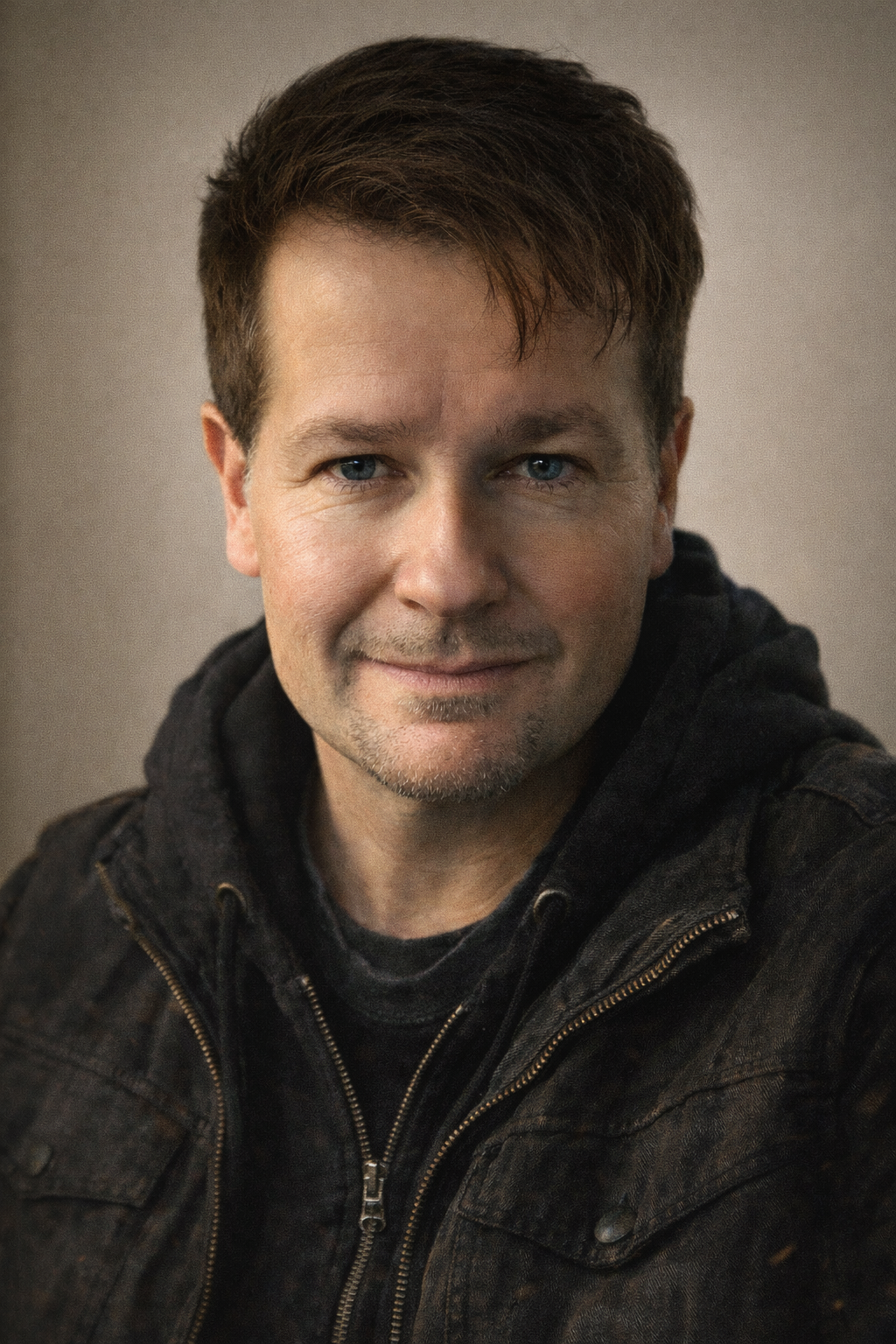
Kevin Doherty is the founder of Modern Practice Method and the author of Build Your Dream Practice, The Instant Upgrade, and The Purpose Principle. A licensed acupuncturist with over 20 years of clinical and marketing experience in the holistic health space, Kevin helps independent practitioners build visible, sustainable, cash-based practices. His work sits at the intersection of positioning strategy, content systems, and the emerging world of AI-driven search.